Looking for the best things to do in Cuyahoga Valley National Park in northern Ohio?
Cuyahoga Valley (pronounced ky-yuh-hoe-gah) feels more like a metro-park than a National Park, which makes it convenient to visit but you won’t necessarily feel like you’re way out in the wilderness. Regardless, there is a lot of cool history, waterfalls, and unique scenery that will make you forget that you’re in Ohio here!
We visited Cuyahoga Valley National Park on a weekend trip in July of 2025 while visiting friends who live in Cleveland. I think we picked the hottest weekend of the year, but we still had a great time regardless of how much we were sweating!
This post details the top 12 things to do in Cuyahoga Valley National Park on your first visit. Whether you’re looking for waterfall hikes, history about the Ohio and Erie Canal, or wanting to ride the Cuyahoga Valley Scenic Railroad, there are plenty of cool things to do here.
Cuyahoga Valley National Park Overview
Cuyahoga Valley National Park protects a section of the Cuyahoga River that lies between Cleveland and Akron, Ohio.
This park blends human history with nature quite beautifully. The Ohio and Erie Canal used to travel through this area to connect the Ohio River with Lake Erie back in the early 1800’s. The canal was used heavily until the great flood of 1913 damaged a large portion beyond repair.
Flood damage along with the rise of rail transportation meant that the canal was no longer used to transport goods or people by the early 1900’s.
Citizens campaigned for the protection of this area in the 1970’s, and as a result, Cuyahoga Valley National Park was established in 1974. The Ohio and Erie Canal serves as the backbone of the park alongside the Cuyahoga Valley Scenic Railroad, allowing visitors to enjoy waterfalls, hiking trails, and history.
You won’t find mountaintop views or complete solitude here, but we found Cuyahoga Valley National Park to be incredibly accessible and convenient to visit without much advanced planning.
The local metroparks also manage public land in this area and share a lot of boundaries with the National Park. This list of the best things to do in Cuyahoga Valley National Park also includes things in the general area, even if they’re not “officially” located within the National Park boundaries.
Related: The Ultimate Red River Gorge Weekend Itinerary
The Best Time to Visit Cuyahoga Valley National Park
The best time to visit Cuyahoga Valley is shoulder season- late spring and fall.
Cuyahoga Valley National Park is located in northern Ohio, which means it is subject to unpredictable midwest weather. Summers are hot and humid and winters are very cold and snowy.
Spring is a great time to visit because the waterfalls will be rushing with water and the blooming wildflowers are gorgeous. The tradeoff with spring is that it is more likely to rain during your visit.
Fall is also a gorgeous time to visit to enjoy the fall colors that typically peak mid-October. Crowd levels are usually higher this time of year, especially on weekends.
We didn’t find the park to be overly crowded on our weekend summer visit, but I have a feeling the 90+ degree temperatures kept a lot of people at home. Parking lots at popular spots do tend to fill up during the summer weekends, but it is possible to plan around this and have a great visit.
Summers will be much quieter if you visit on a weekday, though. Don’t forget your sunscreen and bug spray!
Related: One Perfect Day at Mammoth Cave National Park
How to Get to Cuyahoga Valley National Park
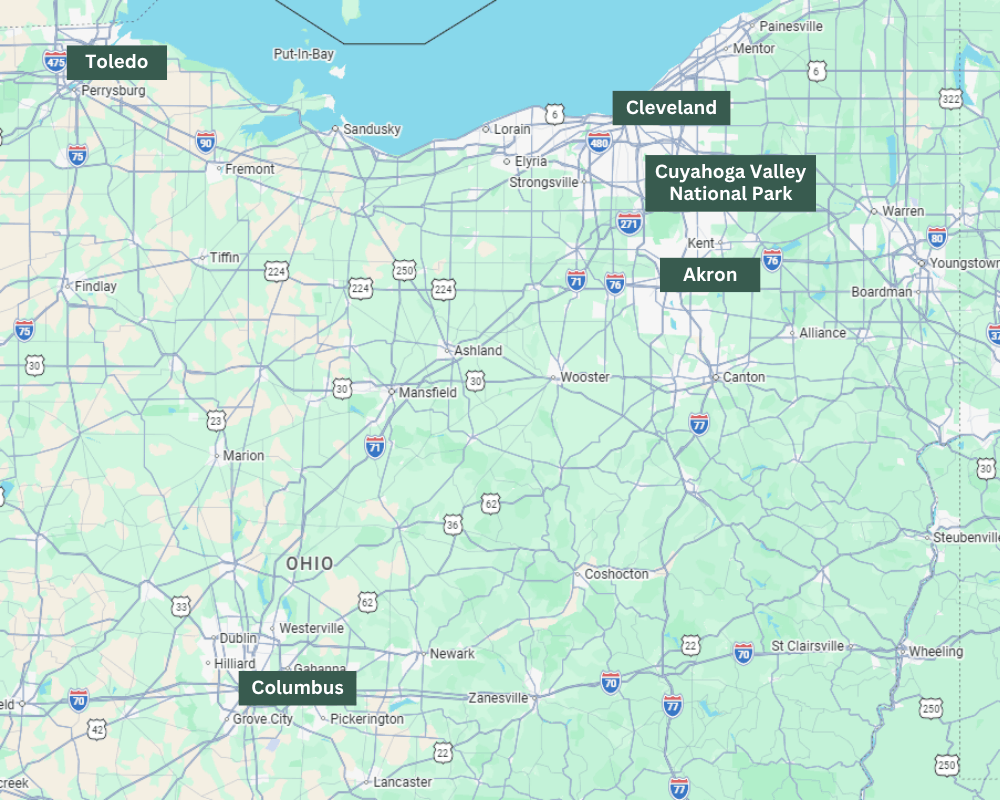
Since Cuyahoga Valley National Park is located in an urban area, it is easily accessible to get to. Located between Akron and Cleveland, there are multiple interstates and major roads that will take you right into and out of the park’s boundaries.
It will only take you 20-30 minutes to drive to the park from either city.
If you plan to fly and rent a car, the Cleveland airport is your best option. Akron does have an airport as well, but it is smaller and has less flight options.
Flying into Columbus can also be a good option, but it will take you about 2 hours to drive to the park.
Drive Times from Nearby Cities:
- Cleveland, OH: 21 miles / 30 minutes
- Akron, OH: 7 miles / 20 minutes
- Columbus, OH: 129 miles / 2 hours
- Toledo, OH: 120 miles / 2 hours
- Pittsburg, PA: 112 miles / 2 hours
Fees & Passes Information
There is no fee to enter Cuyahoga Valley National Park. There are multiple entrances and roads that go through the park, so you won’t find any park entrance stations either.
The main park information hub is the Boston Mill Visitor’s Center.
Even though there is no fee to enter the park, you will need to purchase a ticket if you plan to ride the Cuyahoga Valley Scenic Railroad on your trip.
Related: 16+ Best Things to Do at New River Gorge National Park
12 Great Things to Do in Cuyahoga Valley National Park
1. Visit Brandywine Falls
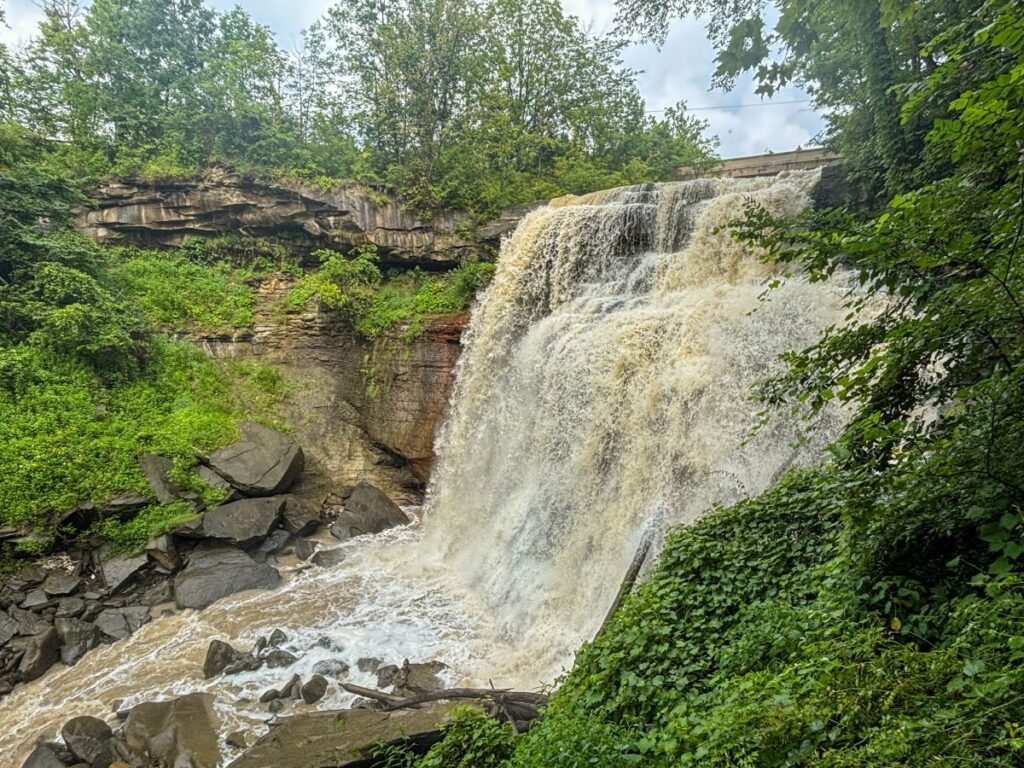
At 60 feet tall, Brandywine Falls is the tallest and most iconic waterfall in Cuyahoga Valley National Park. Viewing these falls is one of the best and most popular things to do here.
There a few ways to visit Brandywine Falls:
- Walk the short boardwalk trail (recommended): There is an upper viewing deck and a lower viewing deck that requires you to walk down 80 steps. This is the quickest and easiest way to view the falls.
- Brandywine Gorge Trail: 1.4-mile loop that takes you past Brandywine Falls and down to the creek level. The trail begins at the boardwalk.
- Hike from the Boston Mills Visitor’s Center: This round-trip hike is about 5 miles so it’s not the ideal way, but it can be an option if you can’t get parking at the Brandywine Falls lot.
My recommendation is to see the falls via the boardwalk trail and save your legs for some other hikes in the park!
This will likely be the busiest area of the park, so plan to do this first thing in the morning or later in the afternoon because it can be difficult to find a parking space during peak season.
2. Hike to Blue Hen Falls
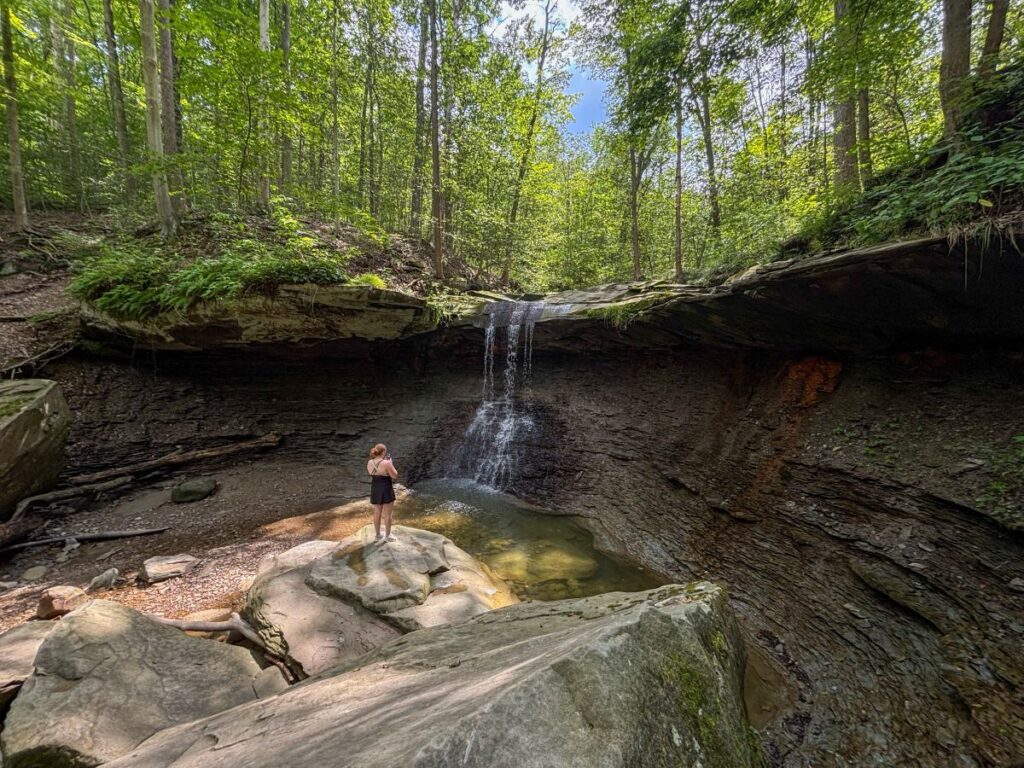
Blue Hen Falls was the first hike we did in Cuyahoga Valley. You will hike up through the woods to a 15-foot waterfall that cascades into a small pool.
We had fun scrambling on the rocks by the creek to get a closer look at the falls.
The most efficient way to see Blue Hen Falls is via the Buckeye Trail from the Boston Mills Visitor’s Center.
This out-and-back hike is 2.5 miles total with just under 500 feet of elevation gain. Expect to hear traffic noise, as this trail is sandwiched between Boston Mills Road and I-271. You won’t feel like you’re in the wilderness per se, but the waterfall is worth it!
Note: The parking lot at the top of Blue Hen Falls has been eliminated, so hiking is your only option to see the falls.
3. Ride the Cuyahoga Valley Scenic Railroad
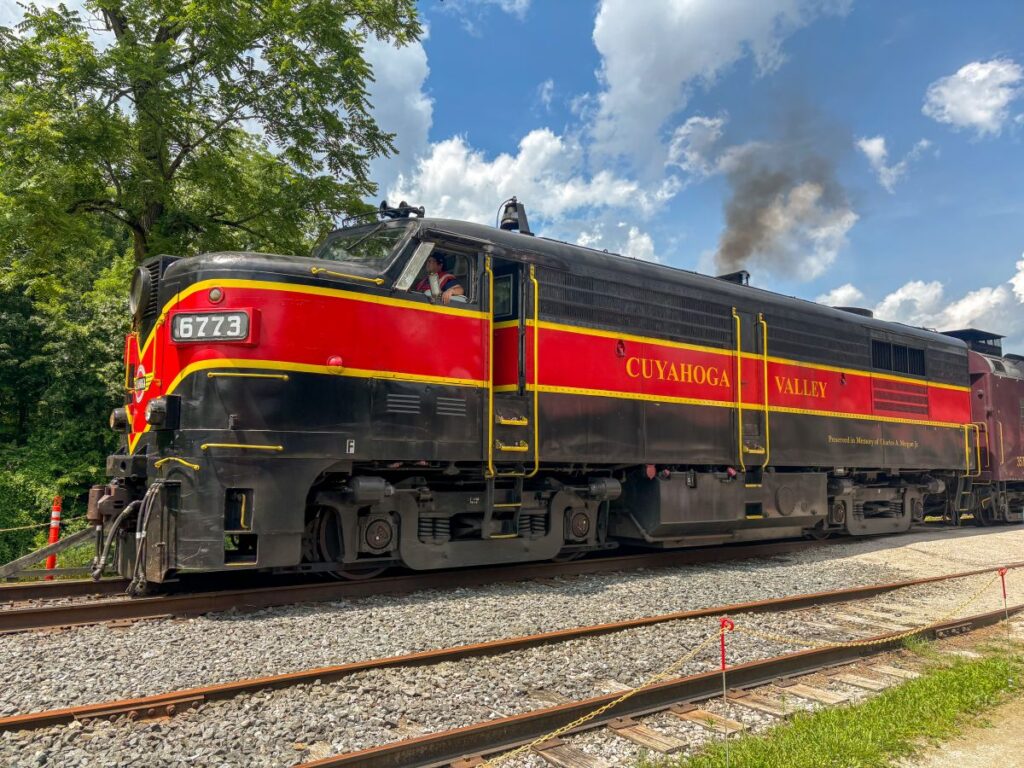
Another quintessential thing to do in Cuyahoga Valley National Park is to ride the Cuyahoga Scenic Railroad. This railway preserves and renovates historic railcars and provides a fun experience for guests visiting the National Park.
The 26-mile railroad runs north-south through the park and connects the greater Cleveland area with Akron.
There are lots of different themed train rides offered throughout the year, with the “National Park Scenic” trip being the most popular option. Trips typically range from 2-4 hours, so it’s possible to combine the train ride with other things in the park on the same day.
We did the National Park Scenic ride from the Peninsula Station and found it to be a great midday break from hiking. I definitely recommend splurging for the “dome” seats on the upper level with the panoramic windows!
Learn more and book your tickets in advance on the railroad’s website here. Tickets do sell out, especially in the summer and fall.
4. Walk or Bike the Towpath Trail
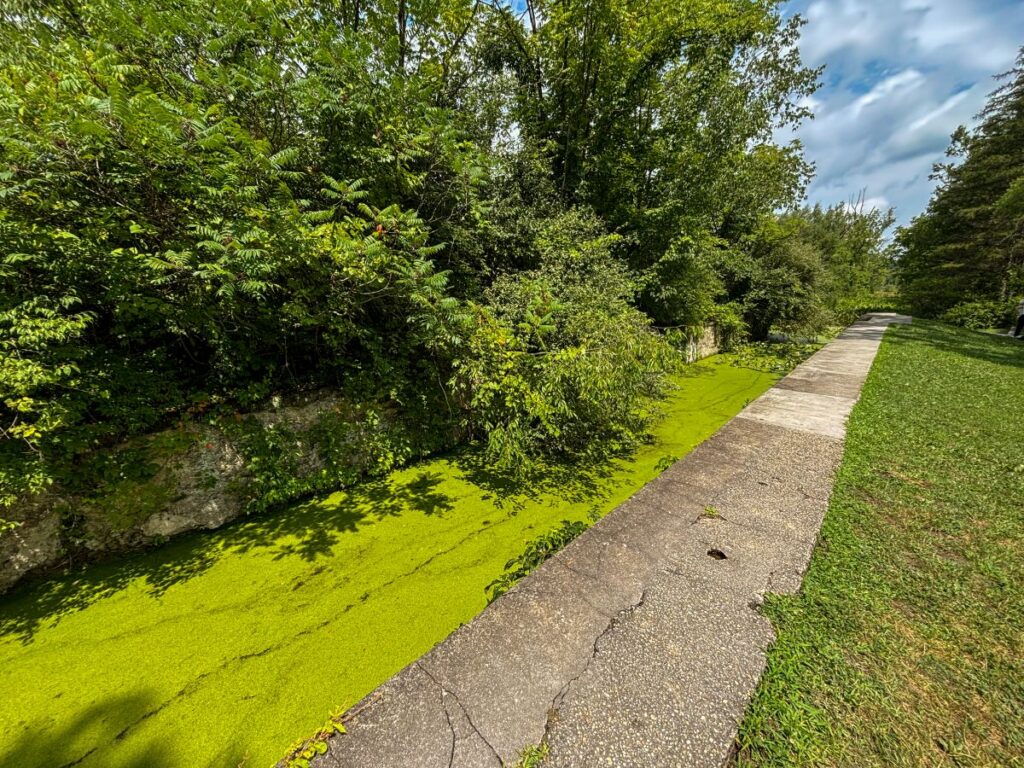
The Towpath Trail follows the historic route of the Ohio and Erie Canal. The entire trail is over 87 miles long (with 20 of those miles located within the park boundaries), but walking or biking just a section of it can be a great way to spend your time in Cuyahoga Valley National Park.
More details on the Towpath Trail, including distances between points, bike rentals, and more can be found on the NPS website here.
The Cuyahoga Valley Scenic Railroad will also transport bikes under 40 pounds and allows for one-way ticket purchases if you want to bike a portion of the trail and then take the train back to your car.
5. Hike the Ledges Trail
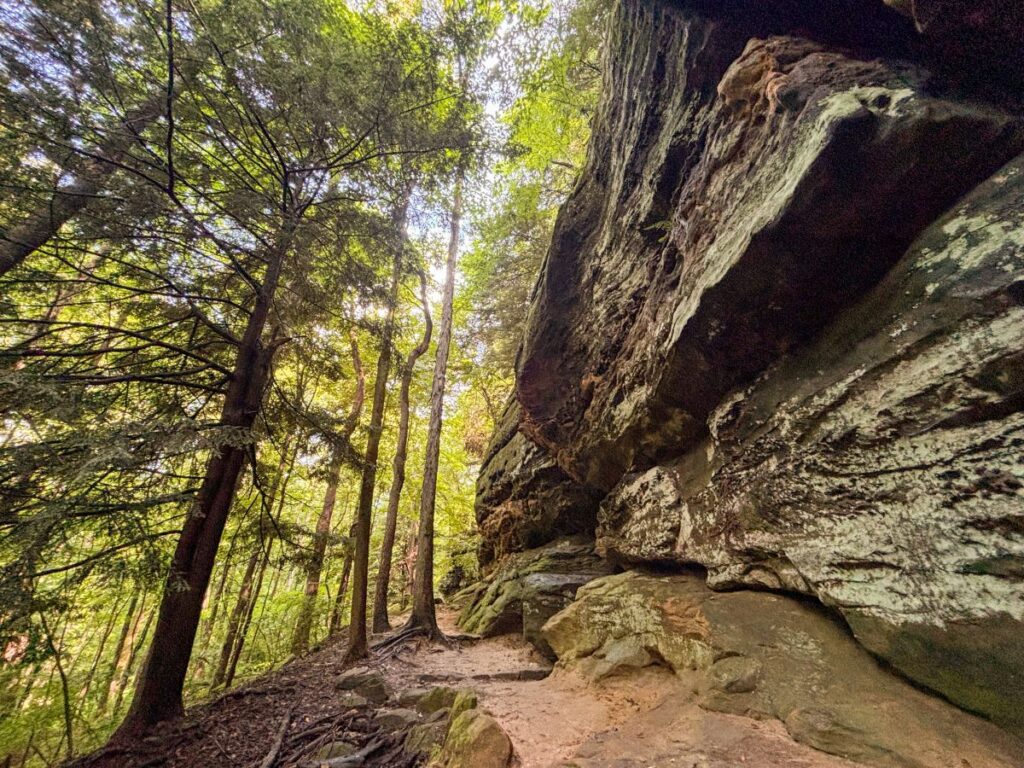
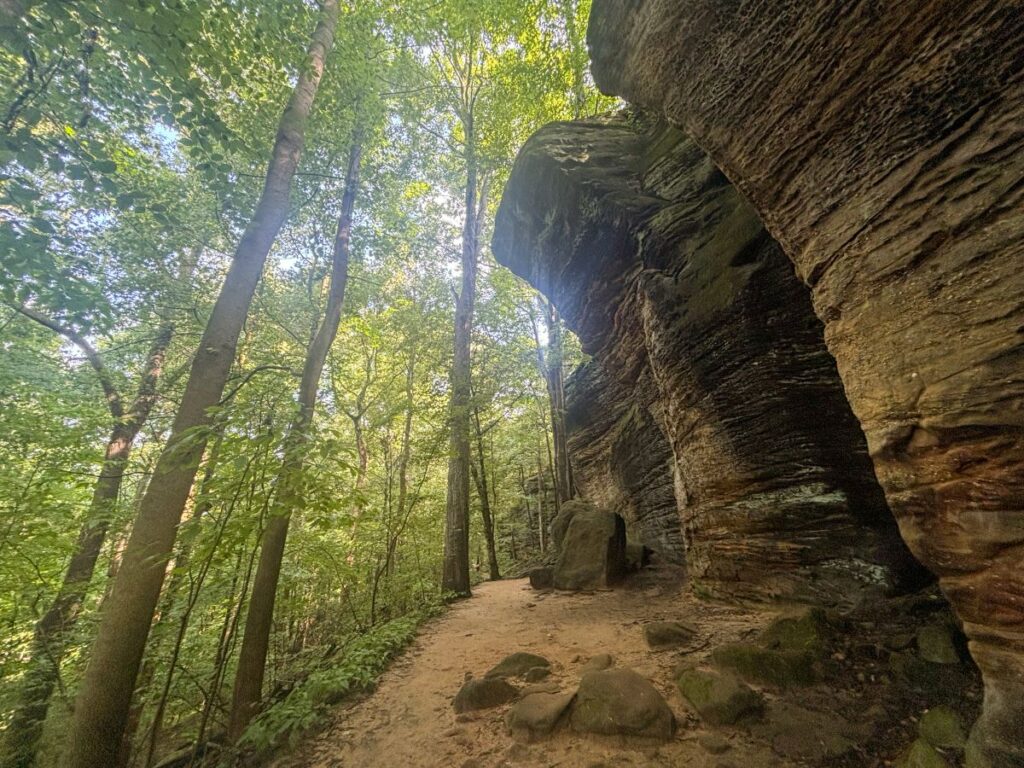
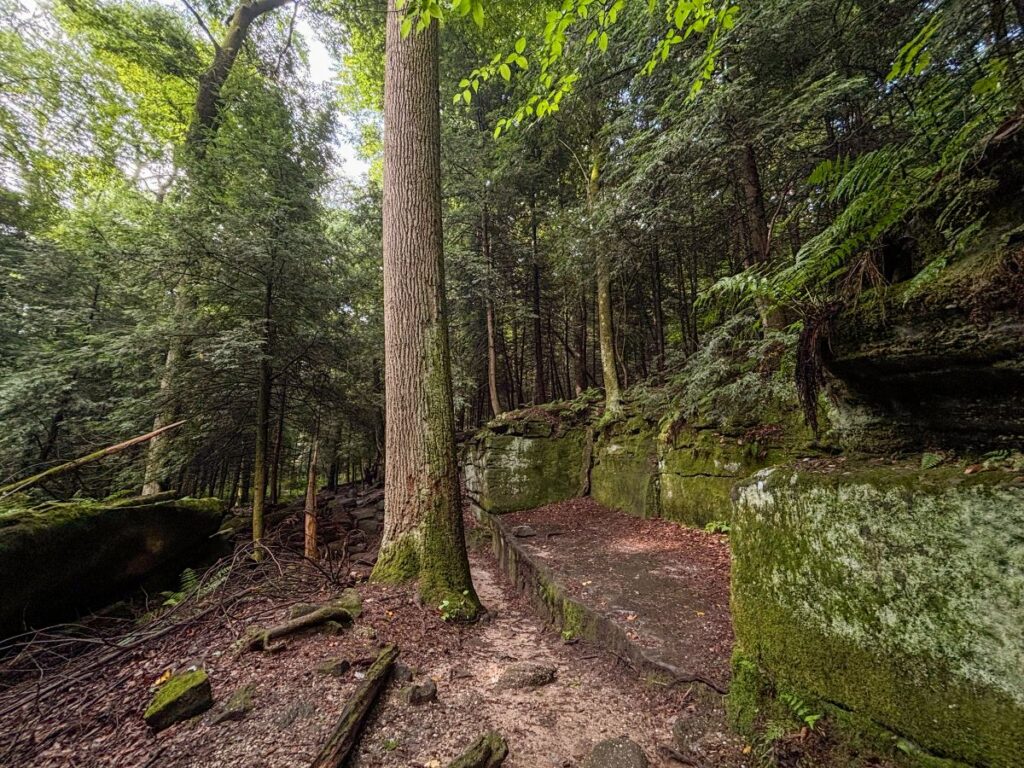
The Ledges Trail was my favorite hike we did in Cuyahoga Valley National Park. This 2.4-mile loop takes you down next to some massive sandstone rock formations and the Ledges Overlook.
You will forget that you’re in Ohio on this trail- it feels like something out of Jurassic Park!
This trail is pretty rocky so wear sturdy hiking shoes. We also found it to be full of mosquitoes in mid-July, so don’t forget the bug spray either!
The scenery here feels a lot different than the rest of the park. This trail was also more secluded and had more of that “National Park” feel than some of the others.
6. Have Lunch at Kendall Lake
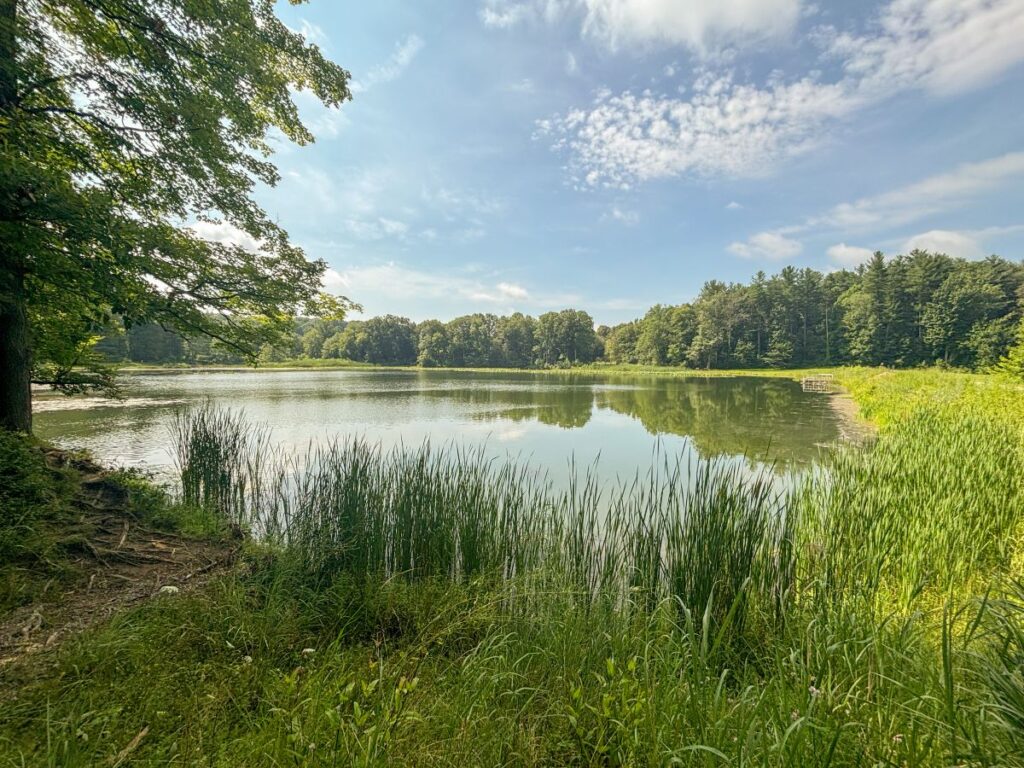
Kendall Lake is a great place to have a picnic lunch while visiting the park. This man-made lake was created by the Civilian Conservation Corps in 1935 by damming up the Salt Run.
There are picnic tables and plenty of space to spread out to relax. After your lunch, you can also go for an easy walk around the lake via the Kendall Lake Trail.
7. Watch for Wildlife at the Beaver Marsh
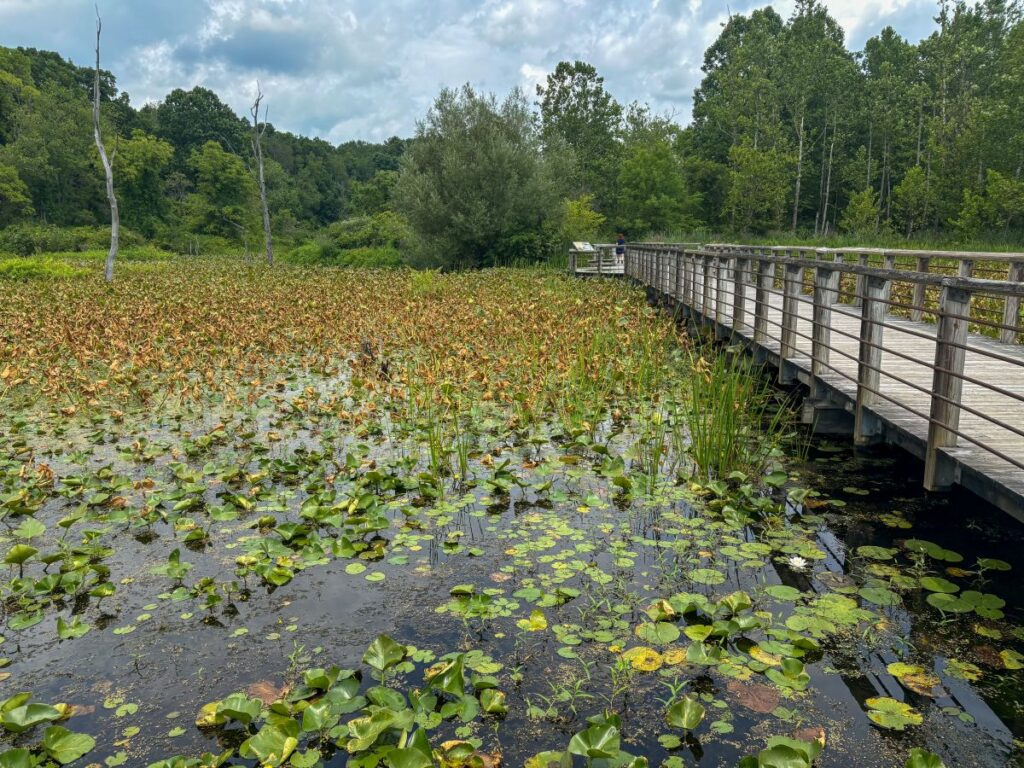
The Beaver Marsh is one of the most diverse wetland areas of the Cuyahoga Valley. It’s a great place to look for frogs, turtles, birds, beavers, and more.
This area used to be a dairy farm back in the early 1900’s. Later on, a nearby family started an auto repair shop, which eventually turned it into a junkyard.
It wasn’t until the 1980’s that a tremendous clean up effort led by the local Sierra club attempted to restore the area back to a wetland.
During this time, beavers also returned to the Cuyahoga Valley and completed the job by building a system of dams that flooded the area back into a wetland. The transformation here is truly incredible!
You’ll access the Beaver Marsh via a short section of the Towpath Trail at the Ira Trailhead. There is a boardwalk trail that takes you through the marsh where you can watch for wildlife.
Wildlife viewing is usually best in the morning and evening, but we were here midday and still saw a Great Blue Heron!
8. Visit Bridal Veil Falls Overlook
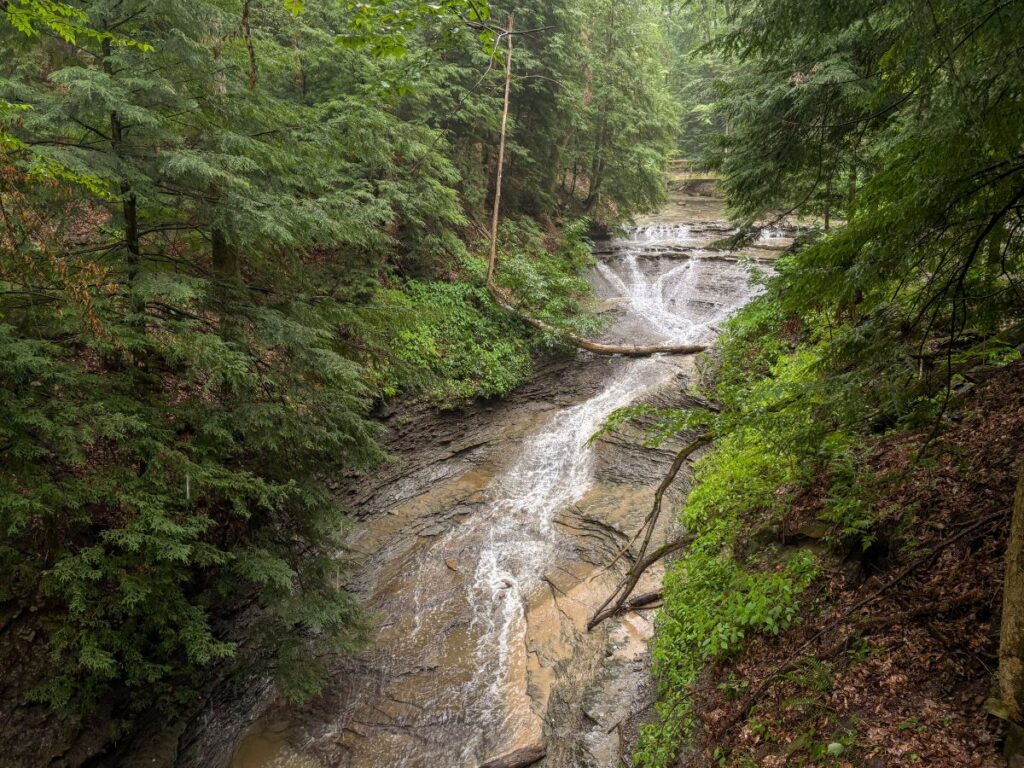
Bridal Veil Falls is not officially a part of Cuyahoga Valley National Park, but is located within the Bedford Reservation (managed by Cleveland Metroparks). It does share a boundary with the National Park so I have included it here.
A short walk leads you to one of the best waterfalls in the area. This is one of the more elegant waterfalls with a smaller trickle of water compared to Brandywine or Blue Hen Falls.
This overlook was our last stop on our trip to Cuyahoga Valley and we got to see it just as it started raining.
There are multiple ways to hike to Bridal Veil Falls, but the overlook trail is the quickest way. If you’re looking for a longer hike, you can take the Bridle Trail for a 4.4-mile out-and-back hike.
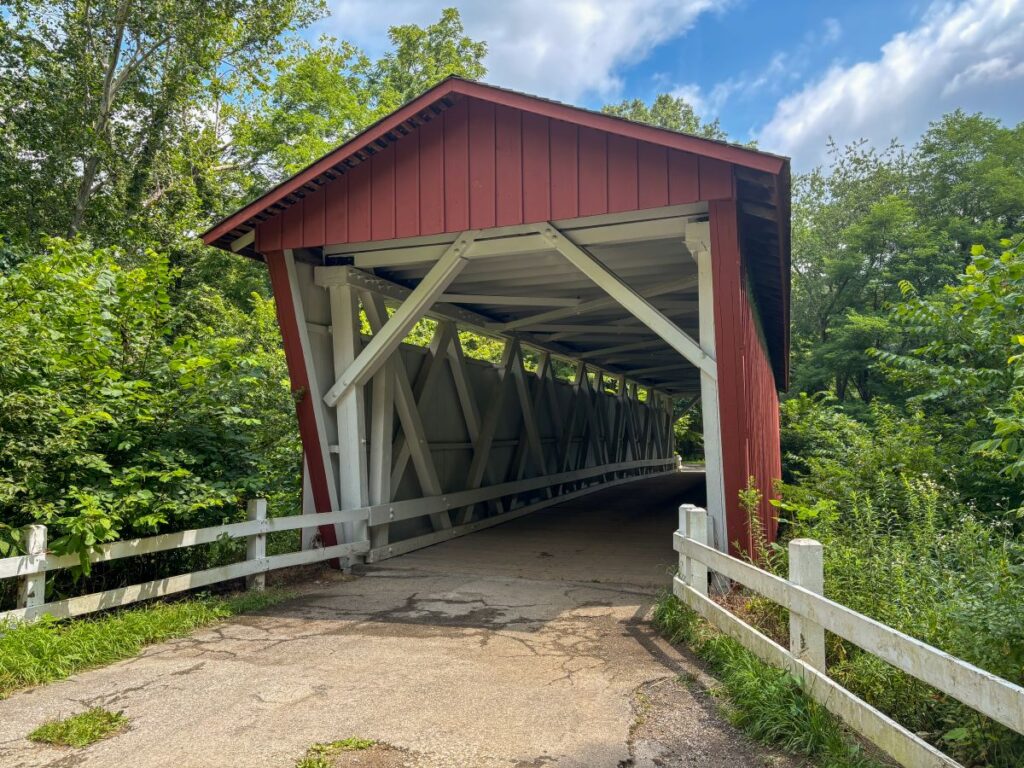
9. Check Out the Everett Covered Bridge
Ohio used to have the record for the most covered bridges in the entire country back in the 1800’s. Now, the Everett Covered Bridge is the only remaining covered bridge in Summit County.
It was destroyed in a storm in 1975 and then rebuilt in 1986 to a historically accurate replica of the original.
A visit here is short and sweet. You can also wander down to the creek below the bridge here for further exploration.
10. Photograph the Brecksville-Northfield High Level Bridge
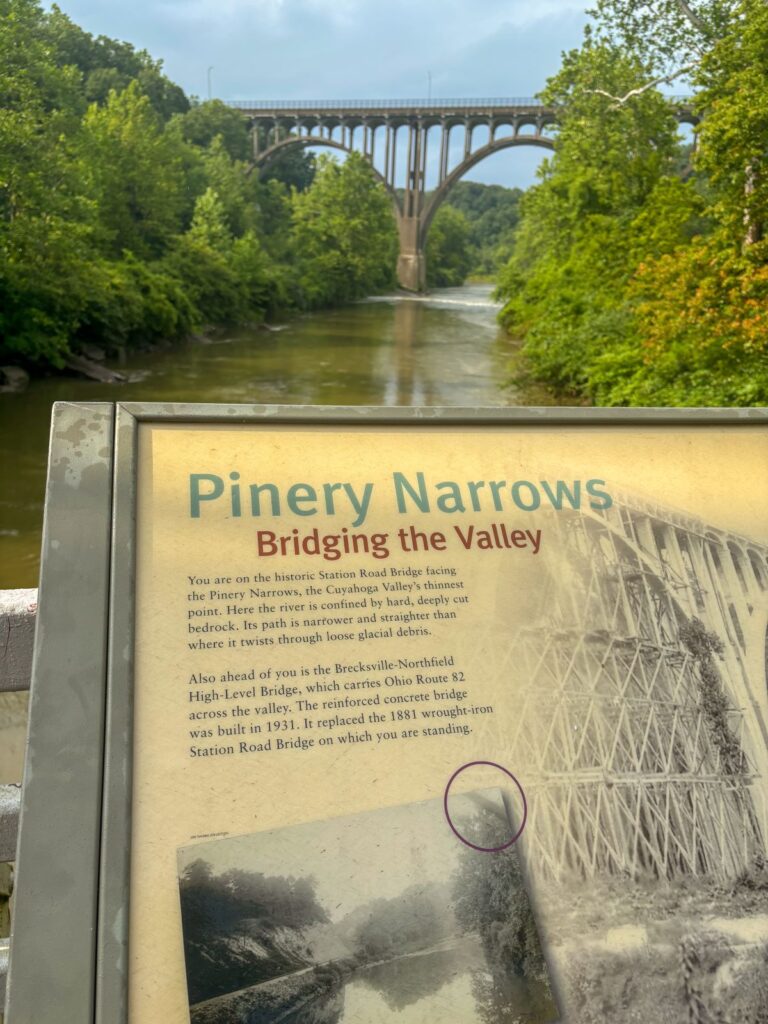
One of the most iconic Cuyahoga Valley photo opportunities is the Brecksville-Northfield Bridge. This open spandrel bridge was designed by Alfred M. Felgate in 1931 and spans over 1,100 feet.
The bridge was constructed to replace the lower level Station Road Bridge (you will stand on this bridge to photograph the Brecksville-Northfield Bridge) when it became obsolete to vehicle traffic.
11. Eat at Szalay’s Farm and Market
Szlay’s is a fourth generation family farmer’s market located just south of Everett.
Grabbing a quick lunch or snack is a great thing to do here. The restaurants are open on weekends between June and October. There is also a fall corn maze as well.
This area does get very busy, especially on the weekends! We drove by midday and could not get a parking space, so we unfortunately didn’t get to stop.
12. Visit the Canal Exploration Center
Another great thing to do at Cuyahoga Valley National Park is to visit the Canal Exploration Center.
This building once served as a tavern, a store, and a residence back in the Canal Era. Now, it is a museum that preserves the history and experiences of those who lived and worked here back in the 1800s.
Located right along the Towpath Trail, combining this experience with walking or biking can be a great way to spend your time in the park.
The Canal Exploration Center does have seasonal hours, so make sure to check the NPS website to make sure it’s open when you plan to visit.
How Many Days Do You Need to Visit Cuyahoga Valley National Park?
As you can see, a lot of the things to do at Cuyahoga Valley National Park are short hikes and quick viewpoints so you can see a lot of the park in just one day. You also won’t have to do a ton of driving since the park is located in an urban area.
I think it is definitely worth it to make a day trip to Cuyahoga Valley, but a weekend is even better. With one day, you can see the iconic Brandywine Falls, hike the Ledges trail, eat at Szalays, and ride the Cuyahoga Valley Scenic Railroad.
With another day, you can add on the hike to Blue Hen Falls, bike a portion of the Towpath trail, and check out the other quick points of interest.
Whether you have just a few hours or a few days, I hope this post helped you plan your trip to Cuyahoga Valley National Park!
I know Cuyahoga Valley doesn’t get the love that a lot of the other National Parks get, but its accessibility, history, and convenience make it worth the visit. I hope you enjoy your trip as much as we did!
-Megan