Visiting the Grand Canyon should be on everyone’s bucket list. Not only is it the second most-visited National Park in the US at 4-5 million visitors per year, it’s also one of the 7 wonders of the world.
Due to it’s popularity, planning a trip to the Grand Canyon South Rim can be a bit tricky. Knowing how to avoid the crowds, understanding the park shuttles, and preparing for a hike down into the Canyon are essential for a good visit.
There are lots of things to do at the Grand Canyon South Rim, from jaw-dropping viewpoints, the famous Rim-to-Rim hike, to exploring historic sites. There is something here for everyone!
I have visited the Grand Canyon South Rim twice, once in January 2019 and again in April 2024. Visiting in different seasons have different pros and cons and may limit the things you want to do.
This post is all about the 12 best things to do at the Grand Canyon South Rim. I’ll also cover the best time of year to visit, park shuttle information, where to stay, and more!
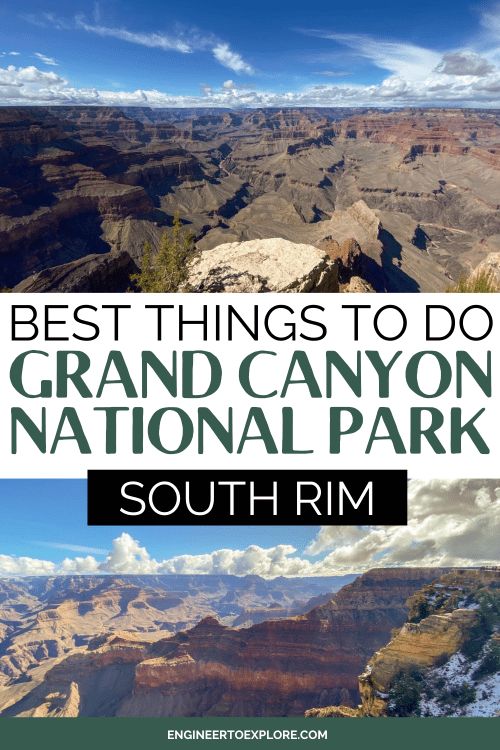
Grand Canyon National Park Overview
Grand Canyon National Park is divided into two major sections: the North Rim and the South Rim.
The South Rim is by far the most popular and accessible area to visit. It sits at a lower elevation, has 2 entrance gates, and is populated with tons of amenities to support the large tourism industry here.
The North Rim sits 1000 feet higher than the South Rim and fully closes for the season in the winter (typically between October 15th and May 15th). It is much quieter here and has less amenities than the South Rim.
Even though both the North and South Rims are located within Grand Canyon National Park, it will take you 4 hours to drive between them.
This post will focus on the best things to do at the Grand Canyon South Rim only.
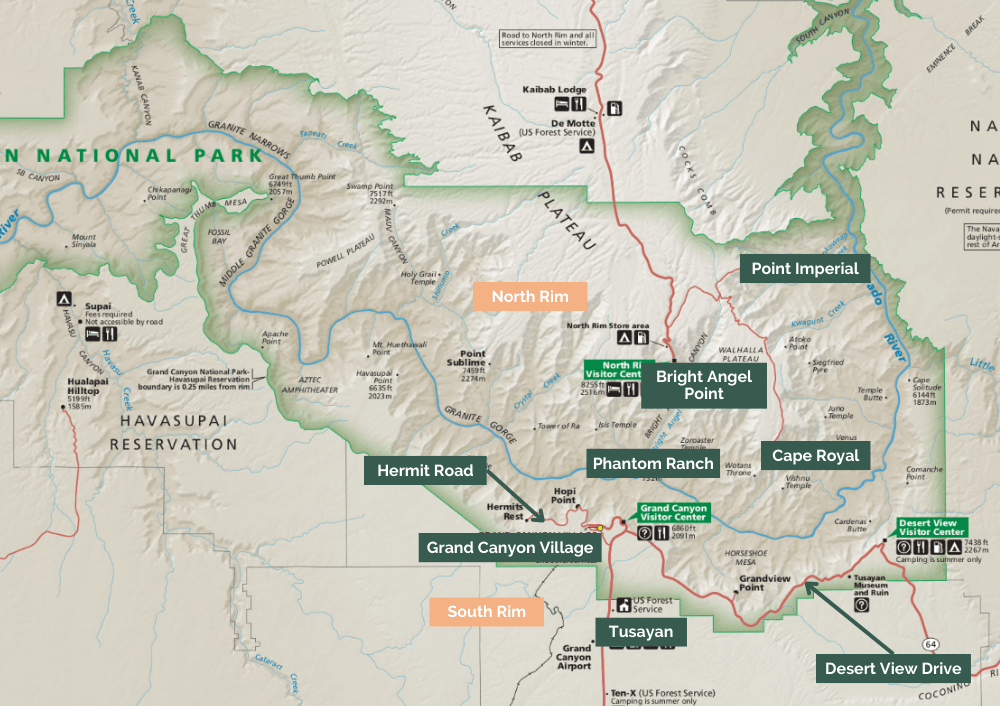
The zoomed-in map below shows the major points of interest within Grand Canyon National Park, but you can download a high-resolution map here.
The Best Time to Visit the Grand Canyon South Rim
The Grand Canyon South Rim is open year-round, however, the best time to visit is in the spring or fall when temperatures are cooler and crowds are lower. During the summer, temperatures can reach over 100 degrees and crowds are at their highest.
This is especially important if you plan on hiking down into the Grand Canyon, as it will be noticeably hotter the further you go. Many people have died by overexerting themselves on this strenuous hike in extreme temperatures without the proper training and supplies.
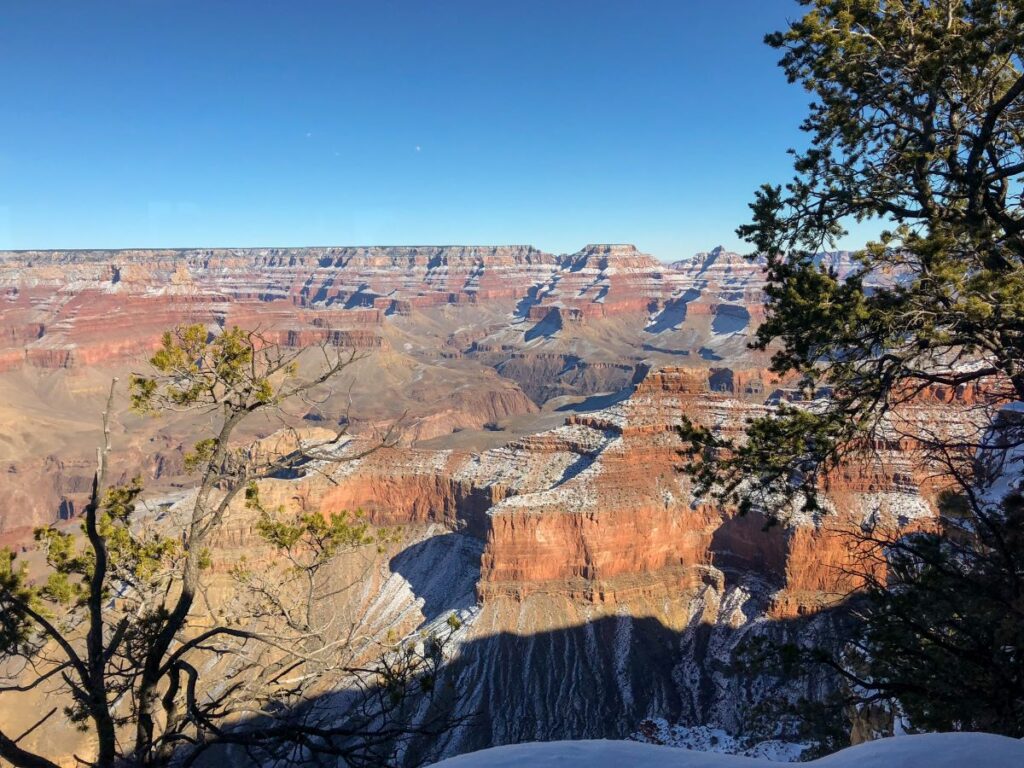
I also think that visiting the Grand Canyon in the winter is a good option as well. Yes, there is the chance of snow and it will be cold, but the crowds are much lower, lodging is cheaper, and you can take your own car to the viewpoints on Hermit Road vs. taking the park shuttle.
Visiting in the winter will be tricky if you plan to hike down into the canyon though, as the trails will be covered with ice so you need to be prepared with spikes and hiking poles. There can be ice on the first few miles of trails as late as May.
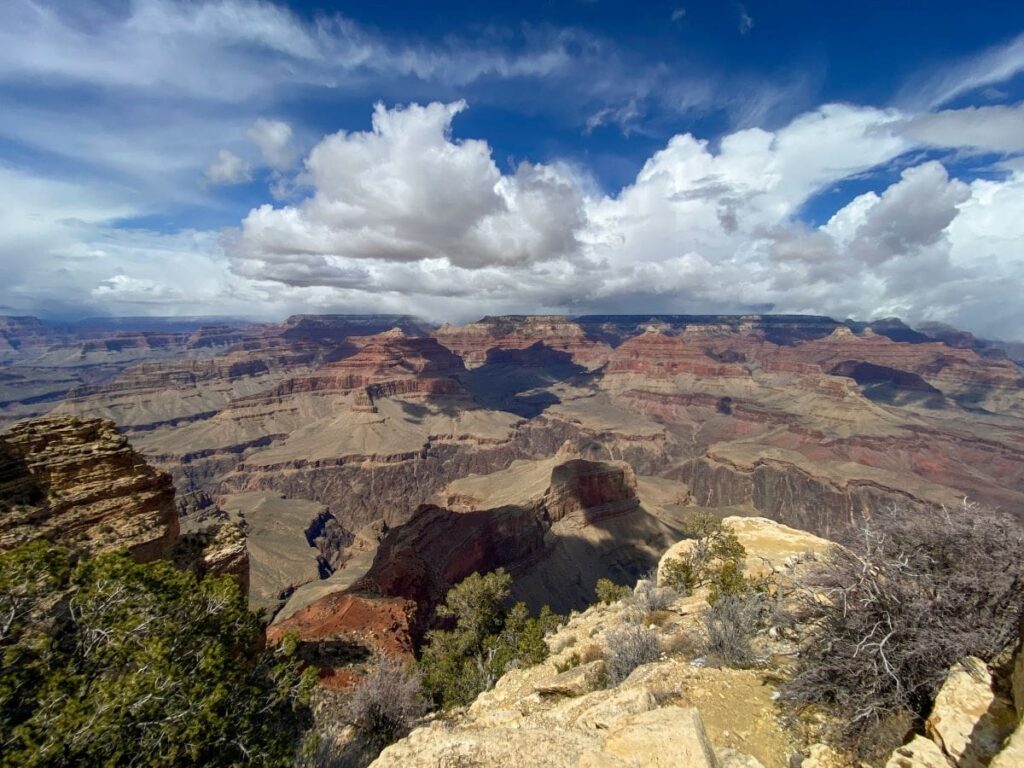
I actually visited the Grand Canyon for the first time in January, and we got lucky with amazing sunny weather! I came back at the beginning of April a few years later and it was still chilly with some residual snow and ice left on the trails down into the Grand Canyon.
How to Get to the Grand Canyon South Rim
Grand Canyon National Park is located in northwest Arizona. The most convenient airports for getting to the Grand Canyon are Phoenix and Las Vegas. Phoenix is 3.5 hours from the South Rim and Vegas is just over 4 hours.
From Phoenix, you’ll take I-17 north to Flagstaff and then head west on I-40 until you reach Arizona Highway 64. Take this road north until you reach the Grand Canyon South Entrance.
From Vegas, you’ll head south on US-93 until you reach Kingman, AZ. You have 2 options from here: Historic Route 66 to Seligman until you reach I-40 (highly recommended for a fun, retro detour) or just taking I-40 the whole way (the fastest route).
Route 66 will add about 20 minutes to your drive, not including stops at some of the restaurants and shops along the way. You’ll then head north on AZ Highway 64 until you reach the Grand Canyon South Entrance.
Fees & Passes Information
It costs $35 per vehicle to enter Grand Canyon National Park and the pass is good for 7 days. It will also get you into the North Rim as well. Fees are collected at all entrance gates to the park.
If you plan to visit more than 3 National Parks or Monuments on your trip to Arizona (or within one year), getting the America the Beautiful National Park Pass will save you money vs. paying the separate fees at each park. It costs $80 and you must order ahead of time as they will ship you a physical pass.
Grand Canyon Shuttle Information
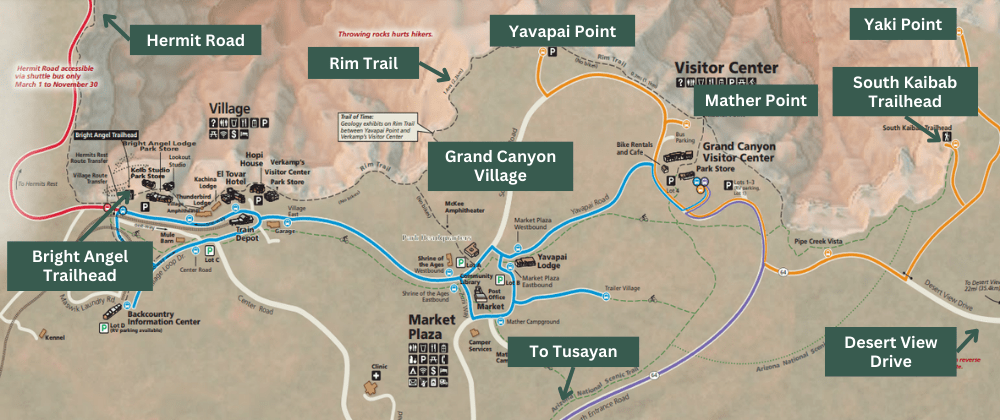
Grand Canyon National Park has instituted a shuttle system at the South Rim to help with parking congestion issues. There are 4 lines that take you to different areas of the park:
Blue Line: This line takes you around Grand Canyon Village. There are some viewpoints along this route, but we found that walking the Rim Trail in this area was a better use of our time. We did use this line to connect from the Red Line to the Orange Line.
Red Line: This is the Hermit’s Rest Route and takes you along a 7-mile road with scenic viewpoints along the way. You must take the shuttle to this area of the park between March 1st and November 30th, as the road is closed to private cars during this time. This also means that the lines for this shuttle get quite long during peak hours.
Orange Line: This line takes you east to Yaki Point and to the South Kaibab Trailhead. If you want to hike any portion of the South Kaibab Trail, you will have to take this line because private vehicles are not allowed in the parking lot.
Purple Line: This line is only open in the summer and shuttles visitors from Tusayan into Grand Canyon National Park. The lines at the entrance station can get long and finding parking during peak season can be difficult, so taking the shuttle into the park might be a good idea, especially if you can’t get in until later in the day.
The shuttles are free and generally run every 10-15 minutes starting at 1 hour before sunrise through 1 hour after sunset. More info on the Grand Canyon South Rim shuttles can be found on the NPS website here.
The map below shows a high-level overview of where each shuttle runs.
How Many Days Do You Need at the Grand Canyon?
The number of days you need at the Grand Canyon depends on how adventurous you plan to be. If you just want to see the main viewpoints and hike a portion of the Rim Trail, one day is all you need.
If you want to hike into the canyon, attempt the Rim to Rim hike, go on a helicopter tour, or enjoy the viewpoints at a slower pace, 2-3 days is the perfect amount of time.
Related: Grand Canyon South Rim Itinerary: How to Spend 1, 2, or 3 Days at the Grand Canyon
12 Amazing Things to Do at the Grand Canyon South Rim
1. Visit the Viewpoints on Hermit Road
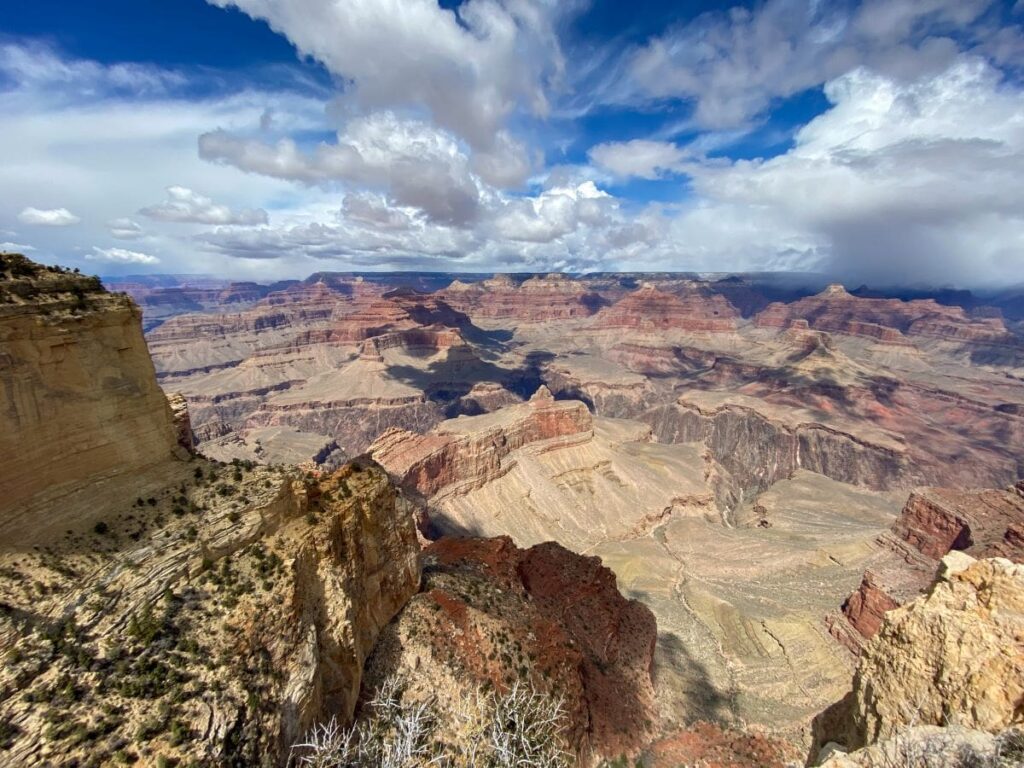
Hermit Road is a 7-mile road that follows a portion of the South Rim of the Grand Canyon. It’s located west of Grand Canyon Village, so you will have to walk or take the blue line shuttle to the last stop to get here.
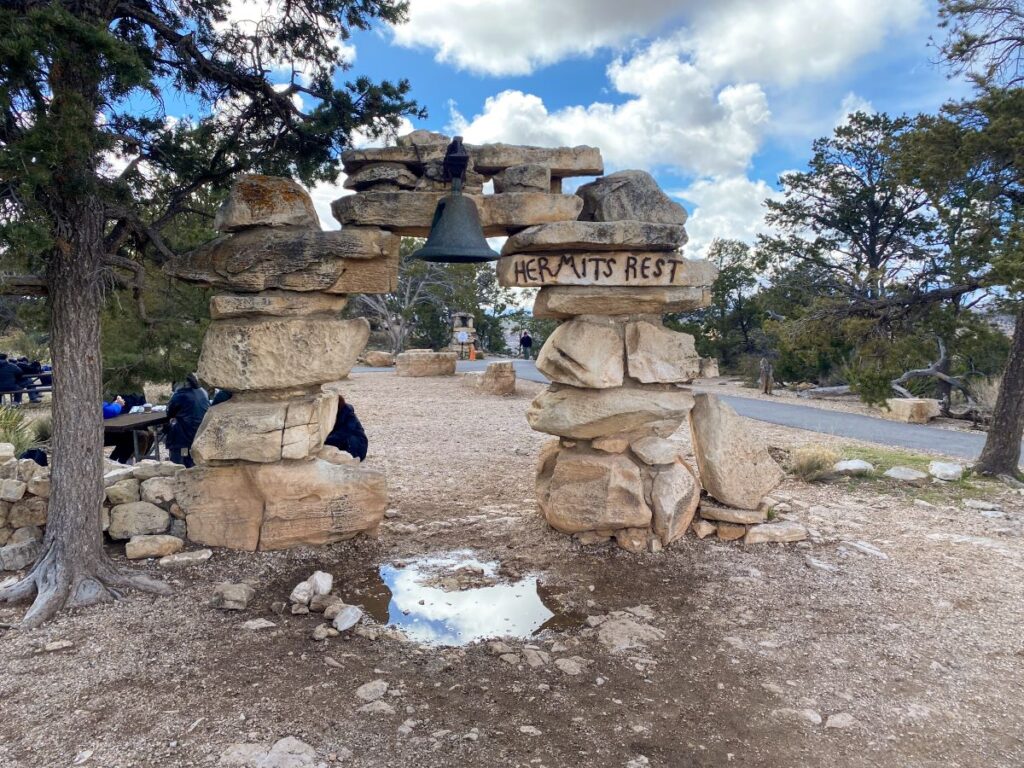
Hermit Road dead-ends at Hermit’s Rest, a historic rest stop that was constructed in 1914 as a last stop before travelers descended down into the Grand Canyon. There is a gift shop and snack bar located in the building.
One of the best things to do at the Grand Canyon South Rim is to visit the scenic viewpoints located along this road.
The major thing to know about this road is that it is closed to personal cars except in the winter. If you visit between March and November, you will have to take the red line shuttle or walk the Rim Trail to each viewpoint.
There are a few ways to visit the Hermit Road viewpoints:
- Take the red line shuttle to each viewpoint and hop on and off as you please
- Walk to each viewpoint (14 miles total, not recommended especially if you are short on time)
- Bike the road
- Drive the road (December through February only)
The Rim Trail also runs along this road, so you can walk between some of the viewpoints and hop on and off the shuttle as you please. We did a combination of walking and taking the shuttle and that worked out well.
I recommend visiting Hermit Road first thing in the morning, as it is one of the most popular things to do at the Grand Canyon. The lines for the shuttles can get really long in the afternoon when everyone is returning to their cars (we learned this the hard way).
2. Hike the Bright Angel Trail
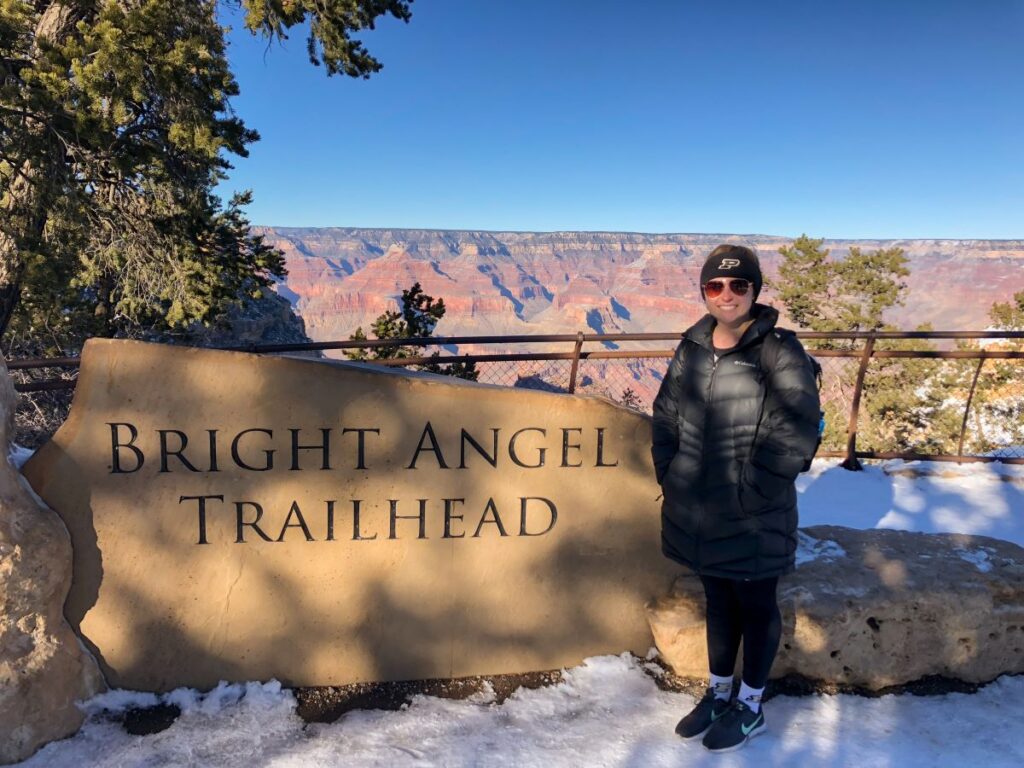
The Bright Angel Trail is one of two trails that leads you down into the Grand Canyon. You can hike this trail all the way to the Colorado River and Phantom Ranch for an extremely strenuous day hike or overnight trip, or hike just a portion of it as a day hike. Hiking down into the Grand Canyon gives you a much different perspective than just looking at it from above.
There are water and restrooms available on this trail as well.
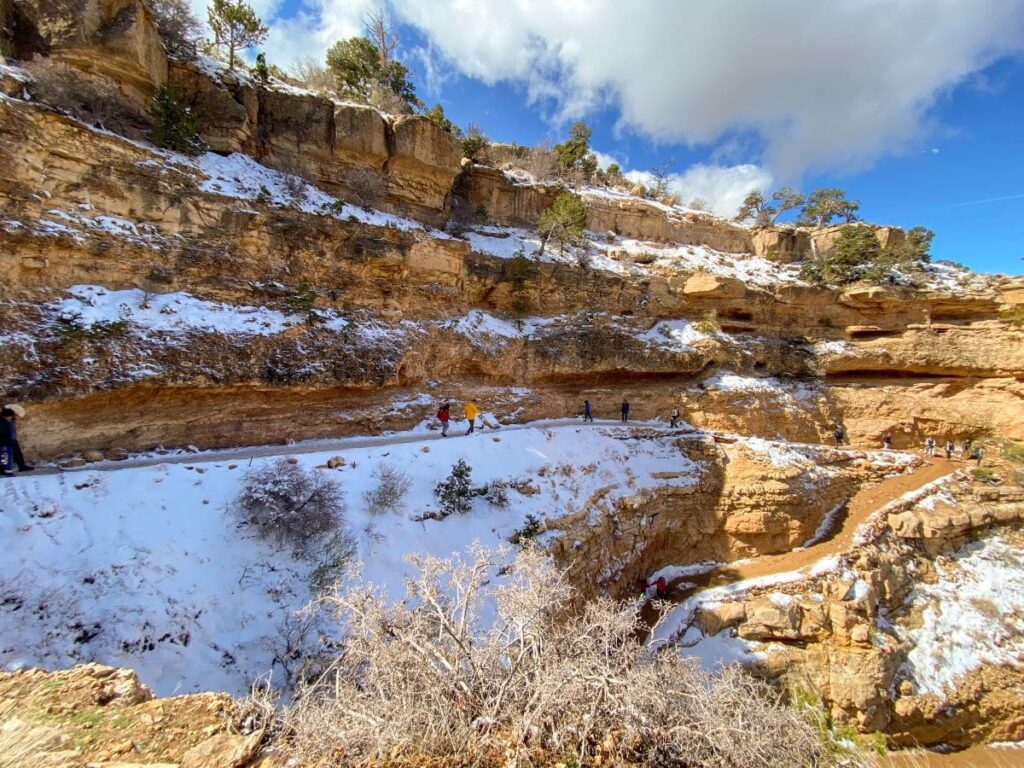
If you plan to hike this trail in the winter or spring, be prepared for ice on the trail, especially in shaded spots at the beginning of the hike.
Here are the landmarks and round trip distances for landmarks on the Bright Angel Trail:
- 1.5 Mile Resthouse: 3 miles, 1120 feet of elevation gain
- 3 Mile Resthouse: 6 miles, 2120 feet of elevation gain
- Havasupai Garden Campground: 9 miles, 3040 feet of elevation gain
- Plateau Point: 12 miles, 3080 feet of elevation gain
The Bright Angel Trail is very strenuous and involves extreme temperature changes, so make sure to assess your fitness level and consult with a park ranger before hiking.
Note: Part of the Bright Angel Trail is closed for waterline maintenance. At the time of writing, the trailhead to Havasupai Gardens is open. As always, check the NPS website for the latest reopening information.
3. Watch a Sunrise & Sunset
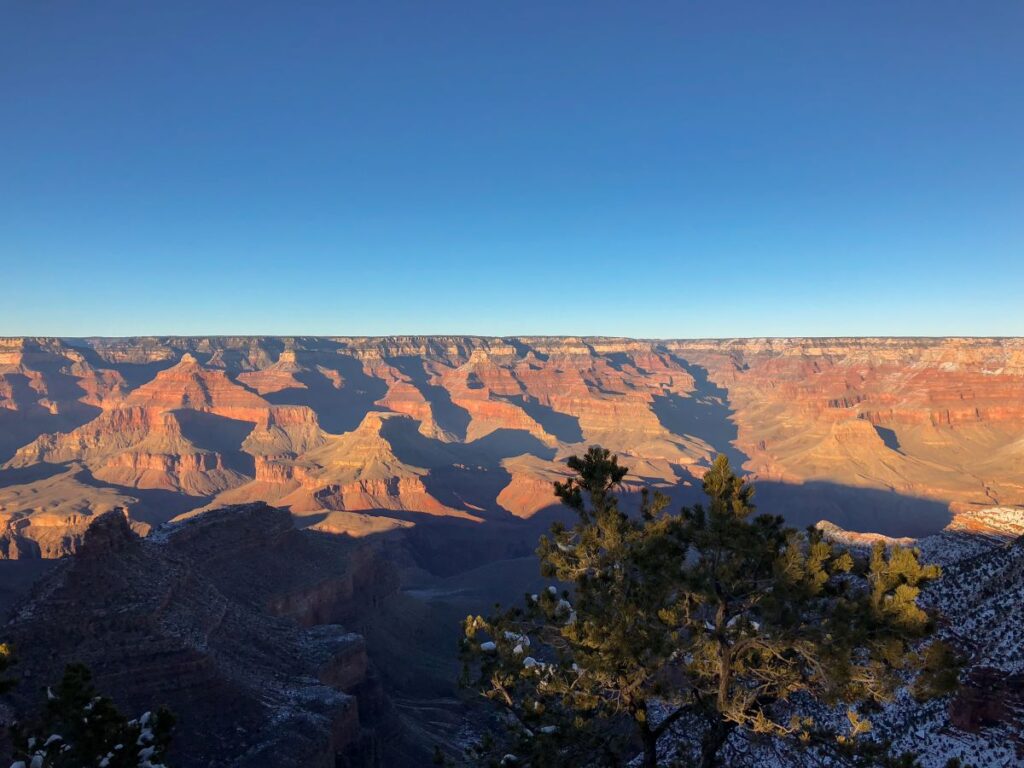
There’s nothing like watching a sunrise or sunset at the Grand Canyon! Anywhere on the South Rim is a great location.
4. Explore Grand Canyon Village
Grand Canyon Village is the hub of the park and where you’ll likely park your car when you enter the park boundaries. It is home to the park headquarters, all of the park lodges, gift shops, restaurants, and more.
Yavapai and Mather Points are located in this area as well.
There are also historical buildings and landmarks to explore.
The El Tovar Hotel, Hopi House, Lookout Studio, Grand Canyon Train Depot, and Kolb Studio are a few of the attractions here. The Grand Canyon Lodges website has a walking tour of Grand Canyon Village along with maps and more information.
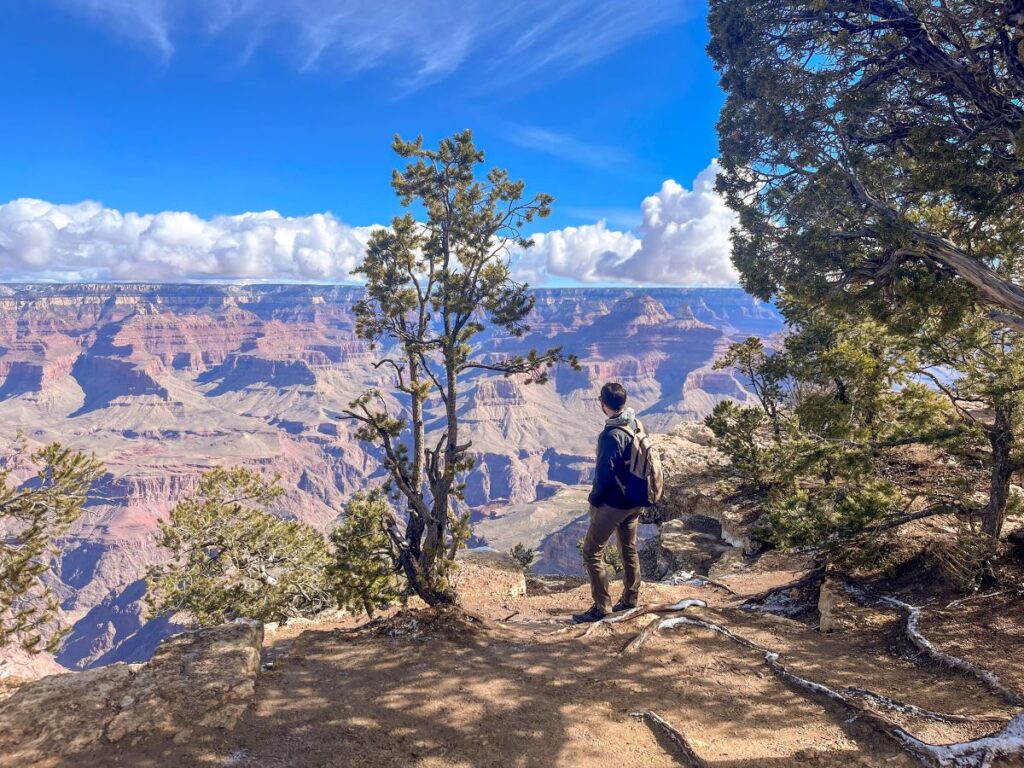
5. Book a Mule Trip
Riding a mule down into the Grand Canyon is one of the most famous things to do at the Grand Canyon. Tours on the South Rim are offered year-round.
You can take a day trip that is just a few hours, or book a multi-night adventure and stay at Phantom Ranch at the bottom of the canyon.
We haven’t personally done a mule ride, but it looks really cool. You might want to skip this if you don’t like heights because some parts of the trail look really narrow with steep drop offs!
Mule rides have limited availability and book up fast. The NPS recommends booking up to 15 months in advance!
More information on Grand Canyon mule rides can be found on the NPS website.
6. Hike the South Kaibab Trail
The South Kaibab Trail is your other option for hiking into the Grand Canyon. You will have to take the orange shuttle line to get to the trailhead. Personal cars are not allowed to park in the lot.
Hiking this trail is very strenuous. Like the Bright Angel Trail, you can hike all the way to the Colorado River or just a portion of the trail as a day hike.
There are also no water filling stations or restrooms on this trail.
Here are the landmarks and round trip distances along the South Kaibab Trail:
- Ooh Aah Point: 1.8 miles, 790 feet of elevation gain
- Cedar Ridge: 3 miles, 1120 feet of elevation gain
- Skeleton Point: 6 miles, 2040 feet of elevation gain
- The Tipoff: 9 miles, 3280 feet of elevation gain
We attempted to hike the South Kaibab Trail to Ooh Aah Point in April, but the beginning of the trail was still extremely icy and we didn’t have the gear required, so this is still on my bucket list to experience!
7. Go on a Helicopter Tour
A helicopter tour is another popular thing to do at the Grand Canyon. Seeing the canyon from a birds’ eye view is absolutely indescribable!
Departing from the South Rim, there are a couple of tour companies to choose from: Maverick and Papillion. All tours depart from the Grand Canyon National Park Airport located in Tusayan.
Check out tours with Maverick here and Papillion here.
This experience is still on my bucket list. It is expensive, but I definitely think it’s worth it if you have the time and budget.
8. Walk the Trail of Time
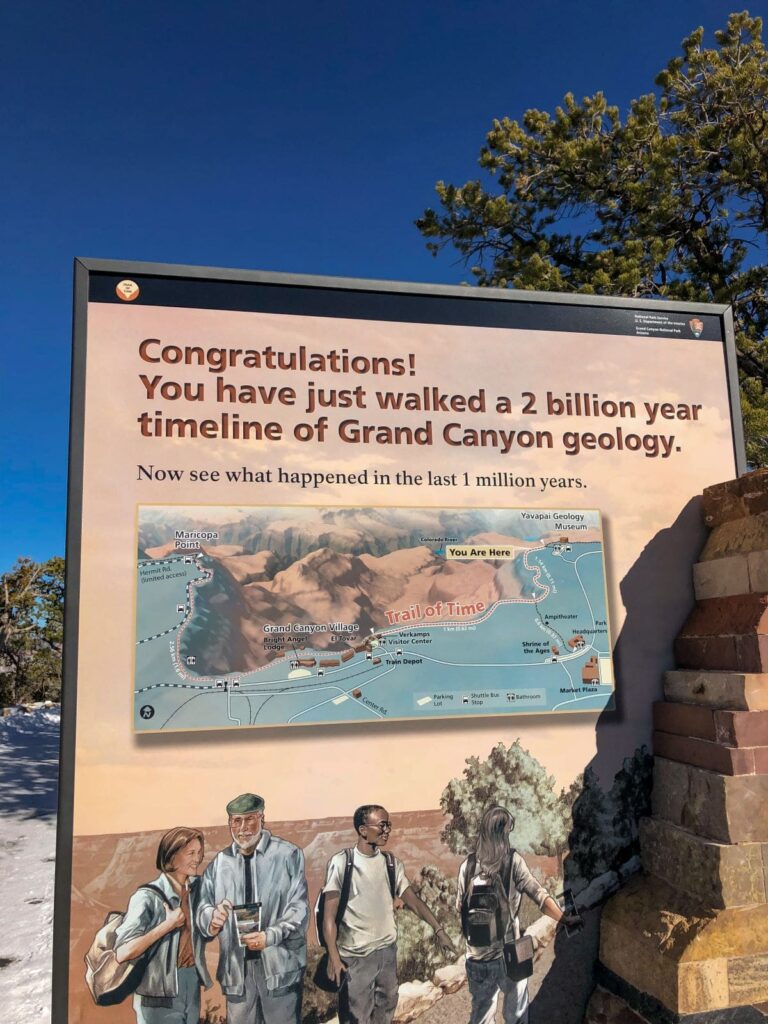
The section of the Rim Trail between the Yavapai Point Geology Museum and Maricopa Point is named “The Trail of Time.” Each meter walked on this paved trail represents 1 million years of geologic history. There are signs and exhibits explaining the geology and formation of the Grand Canyon along the way.
The total walk is 1.3 miles one-way and there are shuttle stops along the way. If you are a geology nerd and love history, this is a great thing to do at the Grand Canyon!
9. Visit Desert View Drive
Desert View Drive is a 23-mile scenic drive on the east end of the park. Unlike Hermit Road, you can take your personal car here. There are some more scenic viewpoints along this road and then it ends at the Desert View Watchtower.
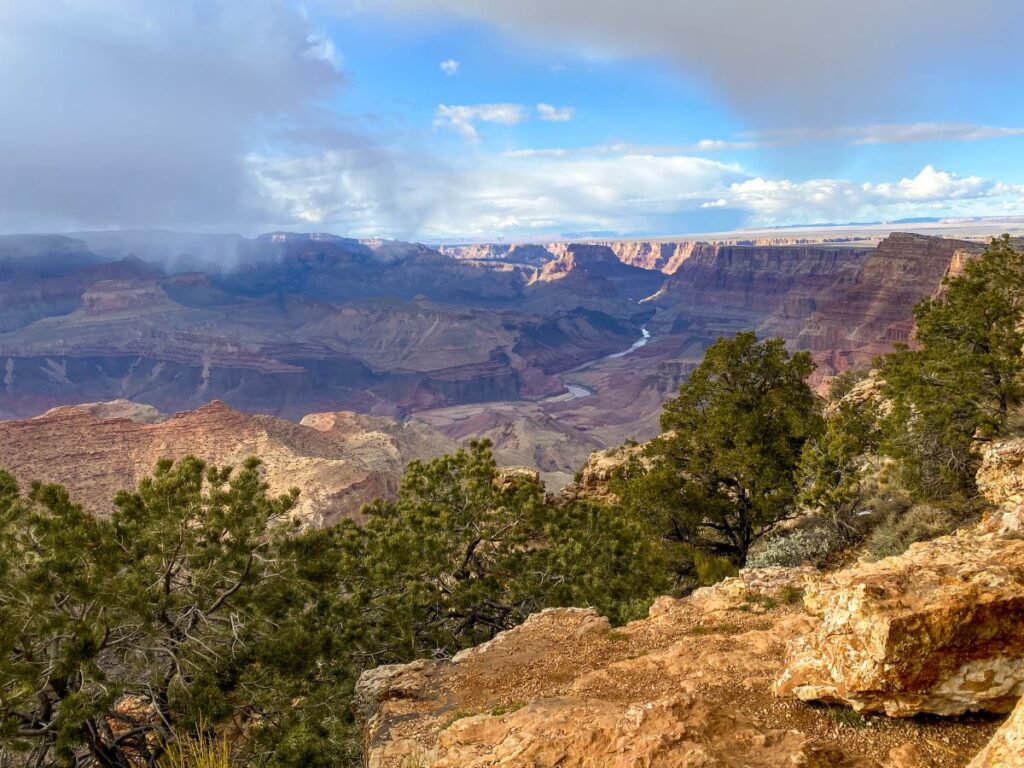
Desert View was my absolute favorite viewpoint at the Grand Canyon. You can see the Colorado River quite clearly and it just puts everything into perspective!
If you make it here before the Desert View Watchtower closes, feel free to take in the view from the tower. Tickets are free, first come first serve, and only 25 people at one time are allowed so the line can get long. More info on the Desert View Watchtower can be found on the NPS website here.
The other entrance gate to the park is located here as well, so it can be convenient to do this at the end of your trip as you exit the park and head to your next destination.
10. Walk or Bike the Rim Trail
There are approximately 13 miles of biking trails at the Grand Canyon South Rim. This is a fun and efficient way to visit the viewpoints along the rim without getting stuck in long shuttle lines.
Bright Angel Bicycles has all kinds of bike options that you can rent for the day. There are E-bikes and regular bikes for rent.
The shuttle buses can also accommodate 2-3 bikes, so you can take your bike on the shuttle if you get tired.
More information on biking the Grand Canyon can be found on the NPS website. There are trail maps, elevation change information, and more.
11. Hike Rim to Rim
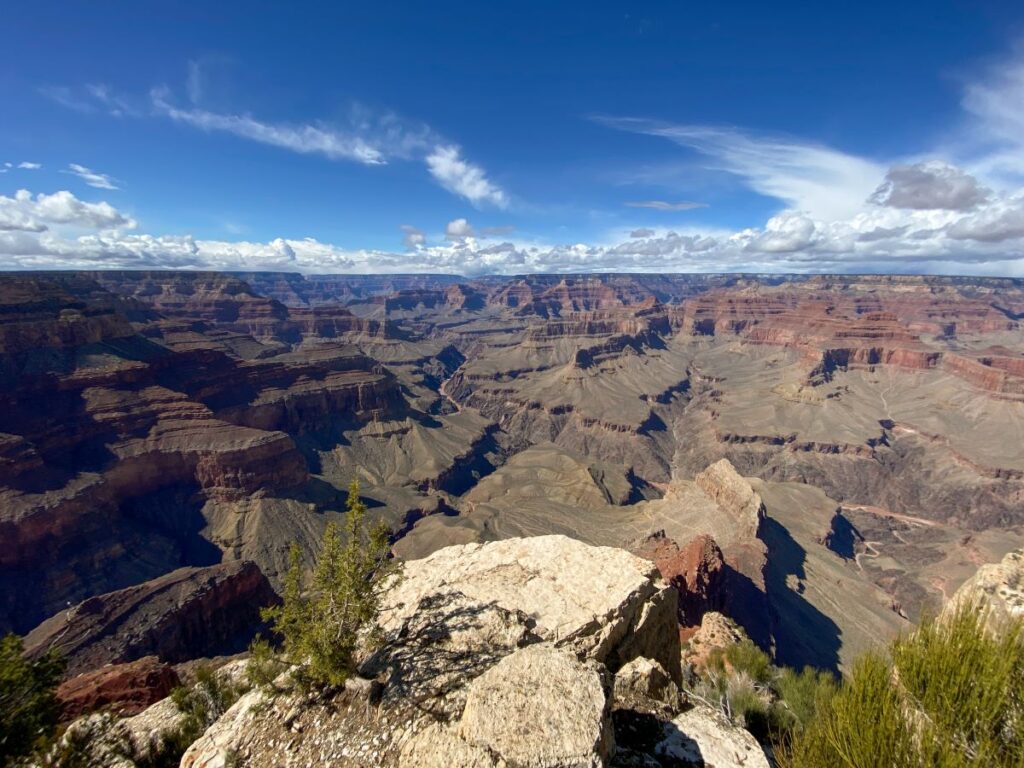
The famous Grand Canyon Rim to Rim hike is 24 miles with over 5200 feet of elevation gain and is typically done as a backpacking trip over 2-4 days.
Most people start this adventure at the North Rim via the North Kaibab Trail, since the North Rim sits at a higher elevation and most would prefer to hike down that extra 1000 feet instead of up.
You’ll hike down to Phantom Ranch at the Colorado River, and then hike back up out of the canyon to the South Rim via the Bright Angel or South Kaibab Trail.
This is an extremely strenuous hike with extreme temperature changes that requires a lot of research and preparation, so please consult with a park ranger and assess your fitness level before hiking!
12. Hike the Rim to River Trail
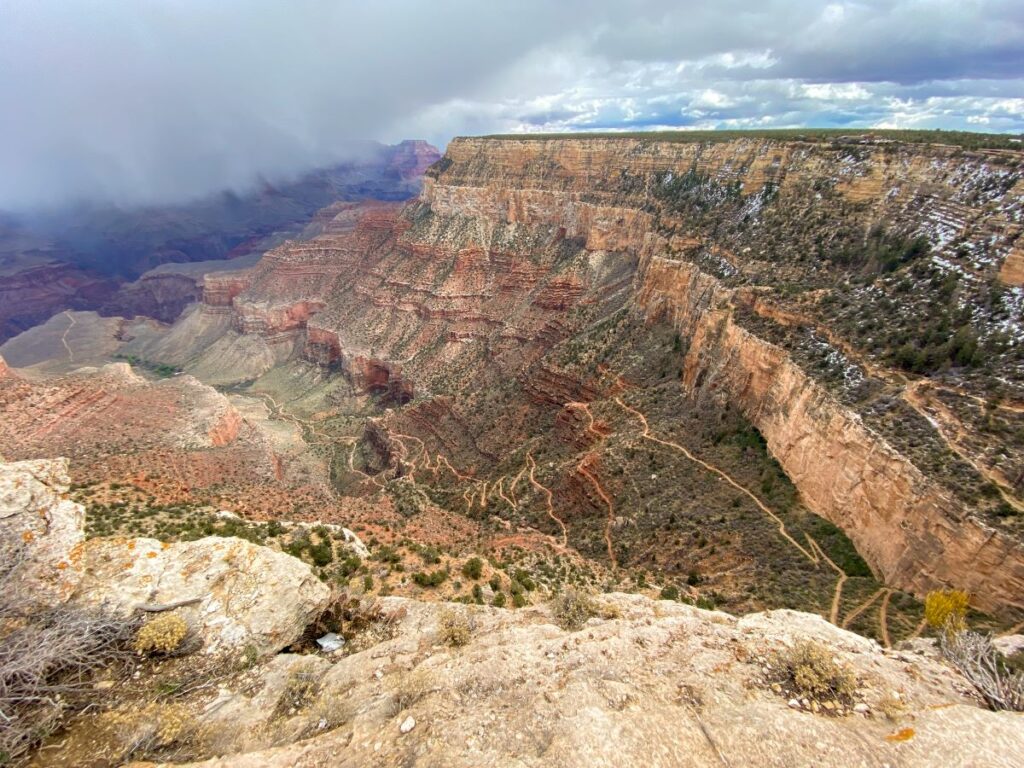
The Rim to River hike at the Grand Canyon is an extremely strenuous hike down to the Colorado River via the Bright Angel or South Kaibab Trail and then back up to the rim.
The entire hike is almost 17 miles with 4700 feet of elevation gain. The NPS recommends doing this hike over 2 days, but you’ll see plenty of people starting very early in the morning and doing it as a day hike.
This trail is very strenuous and involves extreme temperature changes, so make sure to assess your fitness level and consult with a park ranger before hiking.
This hike is different from the Rim to Rim hike because It starts and ends at the South Rim. It is the second most difficult trail in the park, and is just slightly less strenuous than the Rim to Rim hike.
Best Things to Do at the Grand Canyon South Rim With Limited Time
With just one day at the Grand Canyon South Rim, I would prioritize seeing the viewpoints along the Rim Trail. Here’s how I would spend my time with just one day:
- Viewpoints along Hermit Road in the morning
- Lunch at Grand Canyon Village
- Mather and Yavapai Points
- Yaki Point
- Hike to Ooh Aah Point on the South Kaibab Trail
- Desert View Drive, exit the park
I hope this post helped you plan your time at the Grand Canyon South Rim! A visit here is truly unforgettable, whether you have just a few hours or a few days.
-Megan
More Information on Arizona
MORE ON THE GRAND CANYON: Check out my 1-3 day Grand Canyon South Rim itinerary or how to visit the Grand Canyon in winter.
ARIZONA ROAD TRIP: This 9-day northern Arizona road trip that starts and ends in Phoenix takes you to Sedona, The Grand Canyon, Petrified Forest National Park, Flagstaff, Monument Valley, Antelope Canyon, Horseshoe Bend, and more!
FLAGSTAFF, AZ: Located in the heart of northern Arizona, Flagstaff is a neat little town that makes a great home base for exploring the nearby attractions such as the Grand Canyon. There are 3 incredible National Monuments within an hour drive, Lowell Observatory, and plenty of other things to do. Make sure to check out the brewery trail while you’re in town!
SEDONA, AZ: Sedona has some of the best hiking trails I’ve ever seen. It makes a great stop on your way to or from the Phoenix airport or a day trip from Flagstaff. Check out my list of the top 10 hikes in Sedona to inspire your visit, hike the Devil’s Bridge Trail or the Bell Rock and Courthouse Butte Loop.
PAGE, AZ: Page makes a perfect long weekend destination and is packed with famous attractions like Horseshoe Bend, Antelope Canyon, Lake Powell, and more. Check out the top 12 things to do in Page to help you plan your visit!
PETRIFIED FOREST NATIONAL PARK: Petrified Forest is a highly underrated National Park that you can visit in one day with fascinating geology and unreal scenery. It’s a 3-hour drive from the Grand Canyon and makes a great road trip stop. Check out my guide to Petrified Forest here.
MONUMENT VALLEY: Incredible scenic drive full of sandstone buttes where many famous movies were filmed. It’s located 3 hours northeast of the South Rim and will be on your way to Moab, Utah. Check out my guide to Monument Valley for more details on how to visit!