
Cuyahoga Valley National Park
Cuyahoga Valley National Park protects a section of the Cuyahoga River that lies between Cleveland and Akron, Ohio, where the Ohio and Erie Canal used to connect the Ohio River with Lake Erie back in the early 1800’s. The canal was severely damaged by a flood in 1913 and that along with the rise of rail transportation rendered it obsolete.
Citizens campaigned for the protection of this area in the 1970’s, and as a result, Cuyahoga Valley National Park was established in 1974. The Ohio and Erie Canal serves as the backbone of the park alongside the Cuyahoga Valley Scenic Railroad, allowing visitors to enjoy waterfalls, hiking trails, and history.
You won’t find mountaintop views or complete solitude here, but Cuyahoga Valley National Park is incredibly accessible and convenient to visit without much advanced planning.
Cuyahoga Valley Facts
Annual Visitors: 3.02 million in 2025
Size: 33,000 acres
Location: Ohio
Year Founded: December 27, 1974
Entrance Fee: None
Reservations Required?: No
Best Things to Do in Cuyahoga Valley
BRANDYWINE FALLS: Brandywine Falls is the tallest and most iconic waterfall in Cuyahoga Valley National Park. You can view the falls from the short boardwalk trail.
CUYAHOGA VALLEY SCENIC RAILROAD: This 26-mile railroad runs through the heart of the park and connects the Greater Cleveland Area with Akron. Take a ride on the railroad and take in the park’s scenery from a historic railcar.
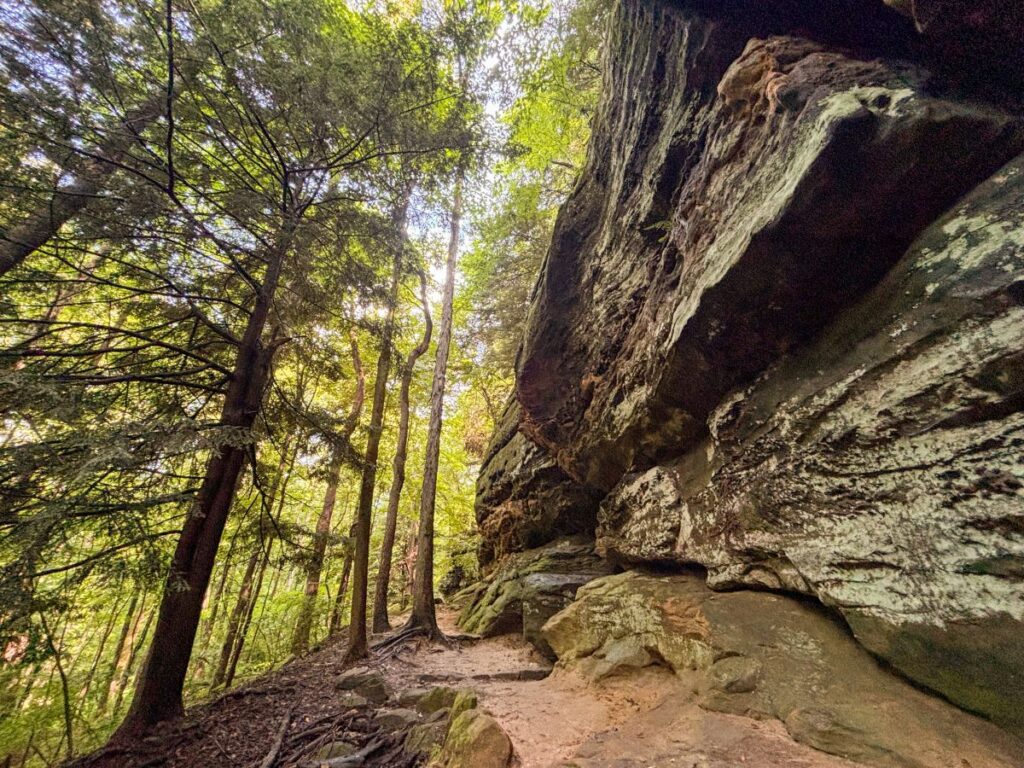
LEDGES TRAIL: This 2.4-mile loop takes you along some massive sandstone rock formations and the Ledges Overlook. This was our favorite trail in the park!
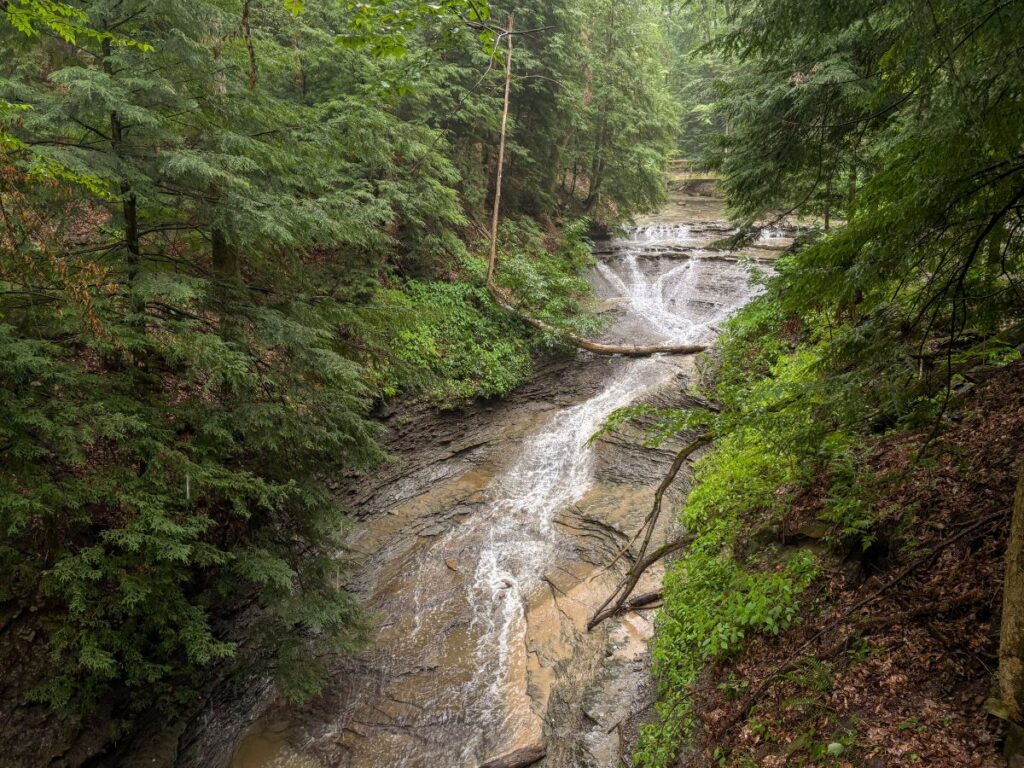
BLUE HEN FALLS: Hike up through the woods to a 15-foot waterfall that cascades into a small pool via this 2.5-mile trail.
TOWPATH TRAIL: The Towpath Trail follows the historic route of the Ohio and Erie Canal. Spend your time in the park walking or biking a portion of this trail. The entire trail is over 87 miles long, with 20 of those miles located within the park boundaries.
CANAL EXPLORATION CENTER: This building once served as a tavern, a store, and a residence back in the Canal Era. Now, it is a museum that preserves the history and experiences of those who lived and worked here back in the 1800s.
BEAVER MARSH: The Beaver Marsh is one of the most diverse wetland areas of the Cuyahoga Valley. It used to be a junkyard until a tremendous clean up effort in the 1980’s restored this area back to its wetland status. The Beaver Marsh is a great place to look for frogs, turtles, birds, beavers, and more.
KENDALL LAKE: This man-made lake was created by the Civilian Conservation Corps in 1935 by damming up the Salt Run. Have a picnic lunch here and/or walk the Kendall Lake Trail that takes you around the lake.
BRIDAL VEIL FALLS: This is one of the more elegant waterfalls with a smaller trickle of water compared to Brandywine or Blue Hen Falls. You can view the falls via a short trail to an overlook.
EVERETT COVERED BRIDGE: Ohio used to have the record for the most covered bridges in the entire country back in the 1800’s. Now, the Everett Covered Bridge is the only remaining covered bridge in Summit County.
BRECKSVILLE-NORTHFIELD BRIDGE: This open spandrel bridge was designed by Alfred M. Felgate in 1931 and spans 1,100 feet over the Cuyahoga River. It was constructed to replace the lower level Station Road Bridge after it became obsolete to vehicle traffic.
More on CUYAHOGA VALLEY
When to Visit
The best time to visit Cuyahoga Valley is shoulder season- late spring and fall.
Cuyahoga Valley National Park is located in northern Ohio, which means it is subject to unpredictable midwest weather. Summers are hot and humid and winters are very cold and snowy.
Spring is a great time to visit because the waterfalls will be rushing with water and the blooming wildflowers are gorgeous. The tradeoff with spring is that it is more likely to rain during your visit.
Fall is also a gorgeous time to visit to enjoy the fall colors that typically peak mid-October. Crowd levels are usually higher this time of year though, especially on weekends.
How Many Days Do You Need?
You can see a lot of Cuyahoga Valley National Park with just one day. Since it’s located in such an urban area, you won’t have to do a ton of driving to get around, which also saves time.
Cuyahoga Valley makes for a great day trip, but a full weekend is even better. With one day, you can see the iconic Brandywine Falls, hike the Ledges trail, visit Bridal Veil Falls, and ride the Cuyahoga Valley Scenic Railroad.
With another day, you can add on the hike to Blue Hen Falls, bike a portion of the Towpath trail, and check out the other points of interest.
How to Get There
Cuyahoga Valley National Park is located in northern Ohio, between Cleveland and Akron. It is only a 20-30 minute drive from either city.
Since the park is located in an urban area, it is easily accessible and quick to get to. There are multiple interstates and major roads that will take you right into and out of the park’s boundaries.
If you plan to fly and rent a car, the Cleveland airport is your best option. Akron does have an airport as well, but it is smaller and has less flight options. Flying into Columbus can also be a good option, but it will take you about 2 hours to drive to the park.
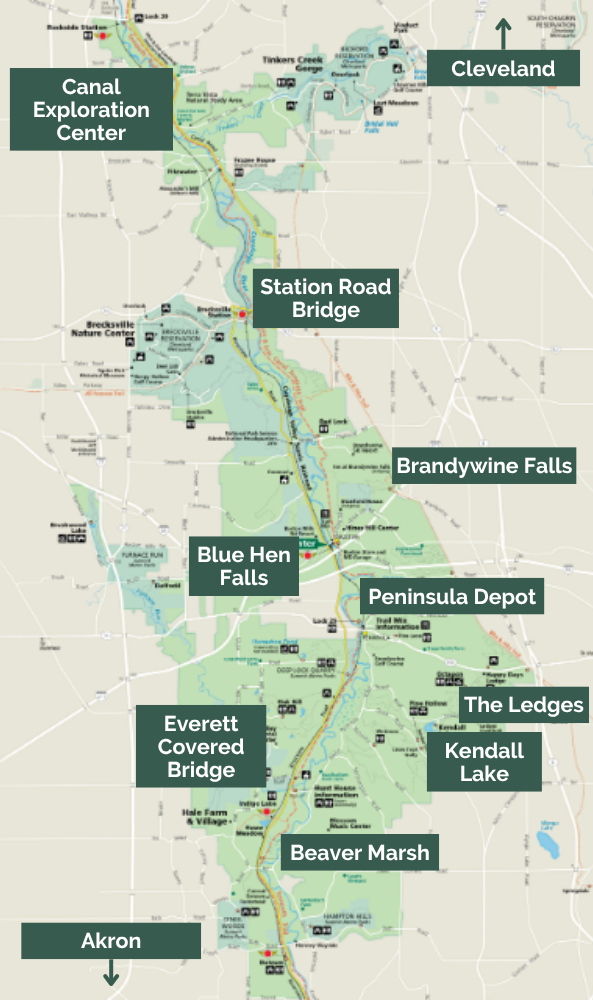
Cuyahoga Valley National Park Map
Where to Stay
Staying in Cleveland or Akron are both good options when visiting Cuyahoga Valley National Park. Both are large cities with plenty of hotels, restaurants, and amenities.
If you’re looking for a small-town feel, consider staying in Peninsula, Stow, or Richfield. Stay in a cozy bed and breakfast and enjoy local restaurants. You’ll also have a shorter drive to get into the park. Supply of these accommodations are limited and can book up quickly, so I’d recommend making a reservation early if this is something you’re interested in.
There are also two lodging options located within the park boundaries: The Inn at Brandywine Falls and The Stanford House, a restored homestead that was built in 1843.